by Ecotourism Australia | Mar 3, 2023 | Article, Media Release
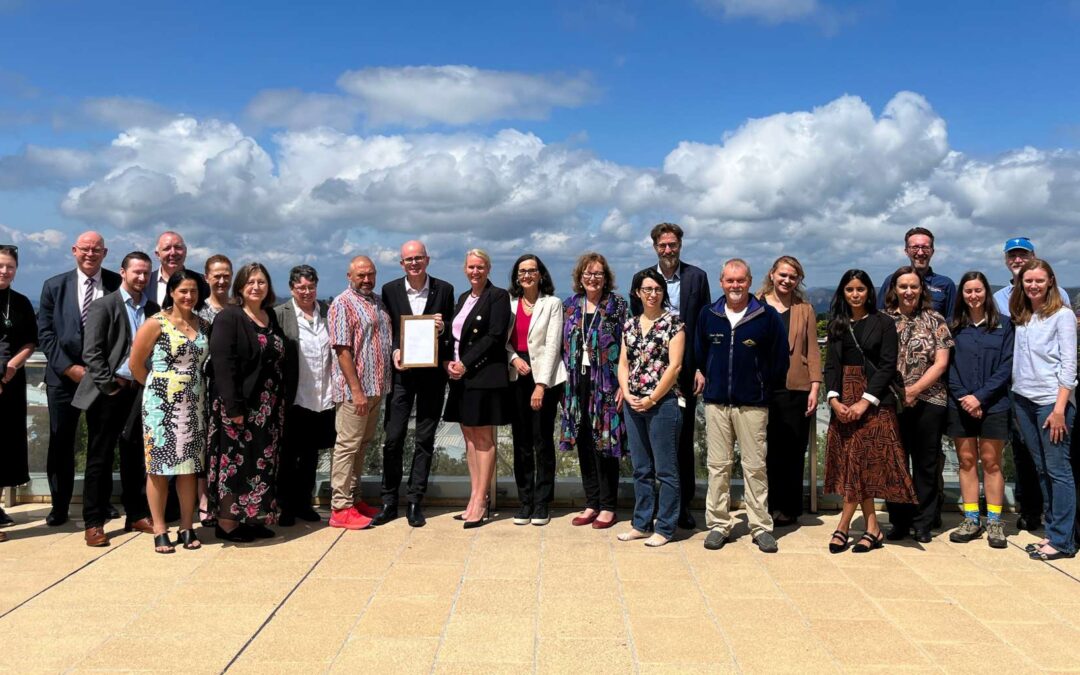
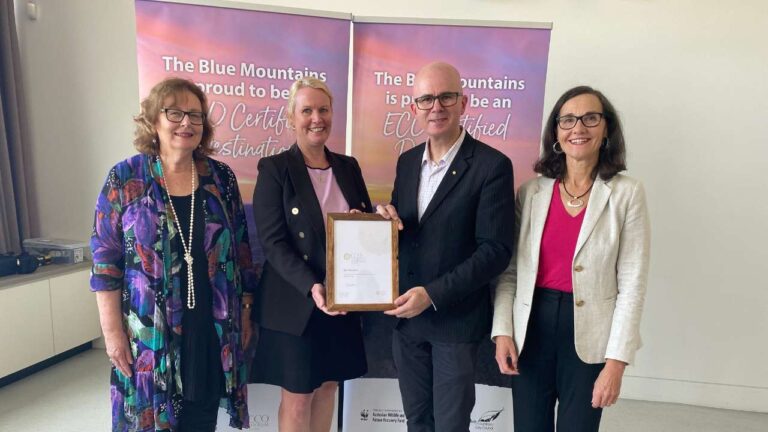
The Blue Mountains region in rural New South Wales has achieved ECO Destination Certification with Ecotourism Australia, meeting global best practice sustainability standards, in time for World Wildlife Day.
The Blue Mountains is the third destination in New South Wales and sixth in Australia to announce ECO Destination Certification, with the Blue Mountains Regional Council leading the certification supported by Blue Mountains Tourism and NSW National Parks.
Meeting 90+ criteria to achieve ECO Destination Certification at the Ecotourism level, this certifies that a nature-based tourism destination has a strong commitment to ecotourism principles involving cultural and natural interpretation and education for visitors, and local business engagement in sustainability.
The ECO Destination Certification program was developed by Ecotourism Australia using the international Green Destinations standard recognised by the Global Sustainable Tourism Council and assesses across the four pillars of sustainability: sustainable management, environmental impact, socio-economic impact, and cultural impact. Destinations are audited onsite by a verified, independent auditor before Certification is awarded.
Ecotourism Australia CEO, Ms Elissa Keenan, said that sustainable tourism in the UNESCO World Heritage Listed area is essential. “Becoming one of the first regions to recognise the Rights of Nature in 2021and projecting net zero emissions by 2025, the Blue Mountains City Council has demonstrated leadership in protecting the natural environment which has strengthened their ECO Destination Certification application.
“The Blue Mountains’ commitment to continuously improving holistic destination and tourism sustainability through the ECO Destination Certification program is a significant achievement for local businesses, community and council. Congratulations on this achievement.”
The Blue Mountains is home to five businesses holding ECO Certification, with Tread Lightly Eco Tours entering Ecotourism Australia’s Hall of Fame in 2020 for achieving over 20 years of certification.
WWF-Australia and Ecotourism Australia joined forces in 2020 to support bushfire-affected regions, such as the Blue Mountains, to recover and gain their ecotourism certification.
“The Blue Mountains is home to some of our most iconic landscapes, but it has also been hit by some of the most devastating fires in recent history,” said Darren Grover, WWF-Australia’s Head of Healthy Land and Seascapes.
“We’re thrilled to see the Blue Mountains bouncing back with such a strong focus on sustainability and tourism experiences that are good for people and nature.
“Ecotourism is the only way for many people to experience Australia’s amazing wildlife and wild places, so it’s vital that this industry is made as sustainable and nature positive as possible.”
WWF-Australia also supported three businesses in the region to achieve ECO Certification with Ecotourism Australia to support and encourage sustainable tourism and conscious traveller visitation from the ground up.
Blue Mountains City Mayor, Cr Mark Greenhill, stated, ““This Certification is a big win for Blue Mountains residents as it will lead to more environmentally conscious visitors coming to our region.
“These are visitors who are more likely to stay longer, explore more and in doing so, have a richer, more authentic visitor experience while making a far greater financial and emotional investment in the region.”
Learn more about our latest ECO Destination: https://greentravelguide.org/destination/blue-mountains
by Ecotourism Australia | Mar 1, 2023 | Article, Media Release
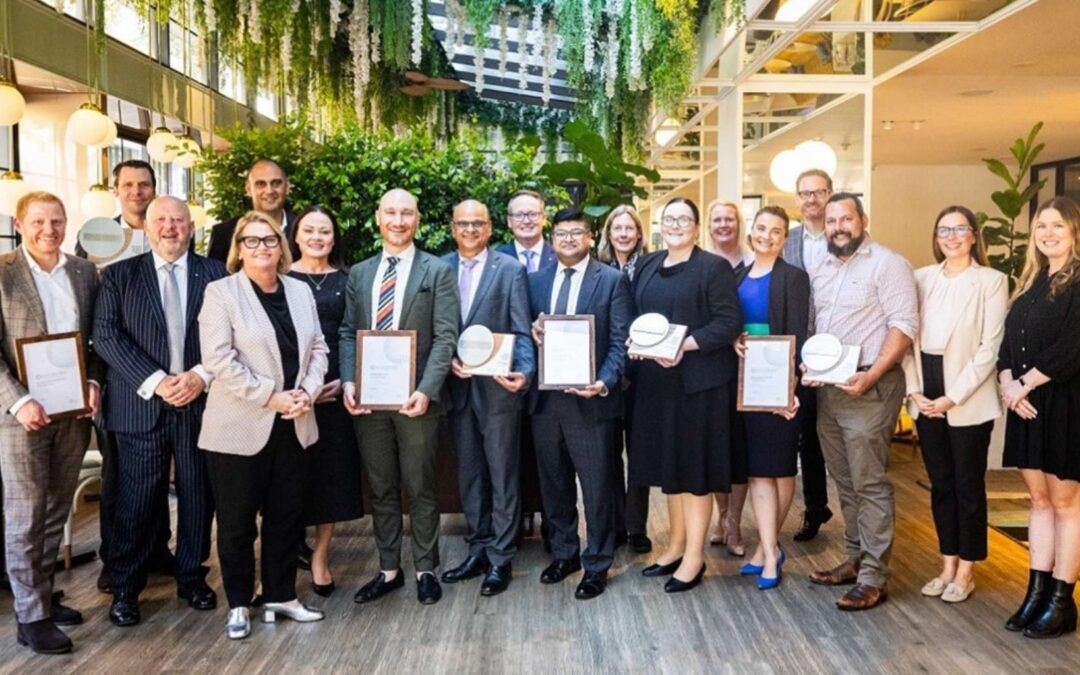
Ecotourism Australia and Accor Pacific have entered into a strategic partnership to see the independent certification of all Accor hotels, apartments and resorts across Australia and the Pacific as Sustainable Tourism certified through Ecotourism Australia’s new Sustainable Tourism Certification program.
The Sustainable Tourism Certification program, launched in late 2022, meets international best practice for sustainability, and the standard is recognised by the Global Sustainable Tourism Council (GSTC), and is part of Ecotourism Australia’s priority to make starting a journey to sustainability more accessible across the entire industry.
Sarah Derry, CEO of Accor Pacific, said “Sustainability is redefining our business model and we are proud to lead the industry forward by investing in our sustainability actions and activities in the region. Our next phase of growth is built on our powerful sense of social, environmental and economic responsibility.”
“In 2022 Accor Pacific removed some 43 single use plastic items such as individual toiletries from guest facing areas in over 80% of hotels. In 2023 and beyond we are committed to taking these actions further into the removal of single use plastics from back of house operations, micro plastics in laundries and by finding an appropriate long term solution to replace plastic water bottles. We know there is a lot more to do and our teams will continue to focus on driving sustainability actions. There are no limits to our ambition.”
Ecotourism Australia CEO, Ms Elissa Keenan, said, “Accor’s shift from internal sustainability measurement to seeking sustainability certification from a third party, and through the peak body of eco and sustainable tourism in Australia, is both commendable and a clear demonstration of their significant commitment to global best practice.
“Accor has a significant presence across regions including Ecotourism Australia’s certified ECO Destinations Port Douglas Daintree, Coffs Coast, Central Coast, Augusta Margaret River and Bundaberg, and 17 other regions working toward certification; and across the entire Australia Pacific region.
“Accor is a leader in tourism in this region. This is a key partnership for our organisations and we look forward to working with Accor properties across their myriad of brands on sustainable and responsible tourism practices across Australia and the Pacific.”
Accor hotels will be assessed across the four pillars of sustainability: sustainable management, environmental impacts, cultural impacts and socio-economic impacts for which each business is independently audited. The Sustainable Tourism Certification is an extension to the legacy ECO Certification program that has been in Australia for more than two decades.
About Accor
Accor is a world leading hospitality group consisting of more than 5,300 properties and 10,000 food and beverage venues throughout 110 countries. The group has one of the industry’s most diverse and fully-integrated hospitality ecosystems encompassing more than 40 luxury, premium, midscale and economy hotel brands, entertainment and nightlife venues, restaurants and bars, branded private residences, shared accommodation properties, concierge services, co-working spaces and more. Accor’s unmatched position in lifestyle hospitality – one of the fastest growing categories in the industry – is led by Ennismore, a joint venture, which Accor holds a majority shareholding. Ennismore is a creative hospitality company with a global collective of entrepreneurial and founder-built brands with purpose at their heart. Accor boasts an unrivalled portfolio of distinctive brands and approximately 260,000 team members worldwide. Members benefit from the company’s comprehensive loyalty program – ALL – Accor Live Limitless – a daily lifestyle companion that provides access to a wide variety of rewards, services and experiences. Through its Planet 21 – Acting Here, Accor Solidarity, RiiSE and ALL Heartist Fund initiatives, the Group is focused on driving positive action through business ethics, responsible tourism, environmental sustainability, community engagement, diversity and inclusivity. Founded in 1967, Accor SA is headquartered in France and publicly listed on the Euronext Paris Stock Exchange (ISIN code: FR0000120404) and on the OTC Market (Ticker: ACCYY) in the United States.
by Ecotourism Australia | Jan 25, 2023 | Article, Media Release
The Bundaberg region has been recognised for their commitment to tourism sustainability in the Southern Great Barrier Reef after announcing they have achieved ECO Destination Certification with Ecotourism Australia.
The region is the fifth destination in Australia and the second in Queensland to become an ECO Destination, championing sustainable tourism growth as international visitation to Australia is set to exceed pre-pandemic levels by 2025, according to Tourism Research Australia.
Developed by Ecotourism Australia, the ECO Destination Certification program uses the international Green Destinations framework recognised by the Global Sustainable Tourism Council to assess a destination across 90+ criteria.
The criteria assess management practices across the four pillars of sustainability and covers environment and climate, culture and tradition, and destination management, and socio-economic impact. Destinations are audited onsite by a verified, independent auditor before Certification is awarded.
Ecotourism Australia CEO, Ms Elissa Keenan, said that fulfilling global best standard sustainability requirements is no small feat.
“Since beginning their sustainability journey in 2020, the Bundaberg region has made significant strides to achieve ECO Destination Certification at the Ecotourism level.
“Bundaberg’s application demonstrated a passion for and dedication to holistic sustainability within the region, championing initiatives such as the One Million Trees Project and the popular Milbi Festival.
“Achieving ECO Destination Certification not only supports local Ecotourism Australia certified operators but inspires local tourism businesses to implement sustainability and achieve certification,” Ms Keenan said.
The Council has implemented subsidies to tourism businesses wanting to undertake sustainability certification and participate in the region’s sustainability vision. ECO certified businesses Lady Musgrave Experience, Lady Elliot Island Eco Resort, Mon Repos Turtle Centre and Kelly’s Beach Resort are among the current sustainability leaders fostering responsible tourism in the Southern Great Barrier Reef, while five businesses are currently applying for Ecotourism Australia’s business certifications.
Ecotourism Australia’s independent auditor applauded the council’s strengthened commitment to climate action in their Towards Net Zero strategy.
“It was a pleasure to note the significant change in sustainable targets for the destination, particularly in relation to [Bundaberg Regional Council]’s reduction in carbon emissions.”
“This is a remarkable achievement and shifting of the carbon emissions goalposts for the destination, and one for which the Council should be commended.”
Mayor Jack Dempsey noted close collaborators including Bundaberg Tourism, PCCC and local operators and organisations while Bundaberg Regional Council lead the certification project.
“It is a massive coup for the Bundaberg Region to achieve ECO Destination Certification and sees our community become one of only a small number in the country to do so,” stated Mayor Dempsey.
The Bundaberg region was a recipient of the Eco-certified Tourism Destination program grant in 2022, introduced by the Queensland Government, to help both applicant destinations and new destinations start or complete a globally recognised certification process.
Ecotourism Australia recently announced that Bundaberg will be the host destination of the ECO Think Destination Forum from 28-30 March 2023, a national forum attracting certified and applicant ECO Destinations, federal, state, and regional tourism organisations, local government and national parks representatives, and tourism marketing and destination management specialists.
Learn more about our latest ECO Destination: https://greentravelguide.org/destination/bundaberg
END
About Ecotourism Australia
Ecotourism Australia is a non-government, not-for-profit organisation, established in 1991, that promotes and supports the ecotourism industry in Australia through building capacity and actively promoting sustainable tourism operations and systems.
Our key program – ECO Certification – was the world’s first national ecotourism certification program. Ecotourism Australia is acknowledged globally for our industry standards and recognised by the Global Sustainable Tourism Council (GSTC). We are recognised as the credible, national peak body for sustainable and nature-based tourism.
We have over 1,700 certified experiences in our ECO, Climate Action, and Respecting Our Culture Certifications. In 2018 we launched the ECO Destination Certification program where operators and government work together to demonstrate a community-wide and entire regions’ commitment to sustainable tourism management practices. Today there are 23 destinations in Australia and the Pacific participating in the program.
In late 2022, a new Sustainable Tourism program was launched to support the broader tourism industry to demonstrate their commitment to, and be recognised for, the four pillars of sustainability: environmental, cultural, financial/business, and socio-economic.
- A Sustainable Tourism Scorecard (Strive 4 Sustainability Scorecard) – with particular focus on small-medium enterprises and micro-businesses, as a pathway to begin their sustainability journey. It is not a certification program; it is a benchmark assessment that allows operators to assess their progress across the four pillars of sustainability. It is suitable for a very wide range of business types and sizes across our sector.
- A higher-level Sustainable Tourism Certification (Sustainable Tourism Certification and Advanced Sustainable Tourism Certification meeting GSTC standards) for non-nature-based tourism businesses to achieve global best practice certification.
- A Sustainable Tourism Destination Certification (Sustainable Tourism Destination Certification and Advanced Sustainable Tourism Destination Certification) for more urban regions wanting to meet global standards).
Ecotourism Australia has global partnerships, working with GSTC, the United Nations Educational, Scientific and Cultural Organisation (UNESCO), the United Nations World Tourism Organisation (UNWTO) and Green Destinations (an international organisation for sustainable destination development) and key partnerships in the Asia-Pacific region including with WWF-Australia, Parks Australia and the Great Barrier Reef Marine Park Authority (GBRMPA).
Our partnership with Green Destinations connects us with tourism operators and businesses around the world certified by Green Destinations (who are also recognised by the GSTC). We have a consumer-facing website that features every ECO certified operator, ECO certified Destination and applicant ECO Destination in Australia: https://greentravelguide.org.
Media contact: Elissa Keenan, Chief Executive: ceo@ecotourism.org.au, 07 3256 6777
by Ecotourism Australia | Nov 9, 2022 | General, Media Release
Ecotourism Australia, in partnership with Tourism Australia, has launched the Strive 4 Sustainability Scorecard program. This program is open to all tourism businesses wishing to start their sustainability journey in a simple and affordable way.
According to Booking.com (2022), 81% of travellers confirm that sustainable travel is important to them, while research from Expedia (2022) found that 7 in 10 consumers have avoided a travel destination or transportation option due to scepticism that the commitment to sustainable practices was true.
The Strive 4 Sustainability Scorecard program is designed for all businesses and operators in the tourism supply chain. The program provides businesses with a scorecard that measures where a business is at on their sustainability journey at a point in time and leverages Ecotourism Australia’s well established sustainability criteria that is recognised by the Global Sustainable Tourism Council.
Ecotourism Australia CEO, Elissa Keenan, said there had never been a more significant shift towards sustainability.
“Travellers needs are changing, we know international tourists are actively seeking tours, accommodation and attractions that can demonstrate their commitment to responsible tourism.
“Through this partnership with Tourism Australia, we are delighted to launch this pathway program to support all tourism businesses start their sustainability journey”.
All businesses involved in the tourism supply chain can participate, which may include (but not limited to) cafes, restaurants, bars, breweries, tour providers, attractions, accommodation providers, events and festivals, travel agents, visitor centres and tourism consultants.
The Strive 4 Sustainability Scorecard complements Ecotourism Australia’s existing certification programs, which have been running for over 30 years. Businesses that complete the scorecard and wish to continue their sustainability journey can now also apply for Ecotourism Australia’s new Sustainable Tourism Certification to receive official recognition for their sustainable initiatives and practices.
Ecotourism Australia has long been a pioneer within the tourism industry, supporting, promoting and recognising tourism operators for their commitment to holistic sustainable tourism, whilst creating the world’s first eco certification program.
More information is available at: https://ecotourism.org.au/sustainability/businesses/strive-4-sustainability-scorecard/
by Ecotourism Australia | Jul 21, 2022 | Article
Key Messages Overview:
- The State of the Environment report describes the majority of Australia’s environment as being “poor and deteriorating,” a devastating outcome. Ecosystems on the brink of collapse, and the list of threatened species continuing to grow is something that should concern every Australian.
- Nature-based tourism is at the core of ecotourism. Wildlife protection, carbon emission reduction and environmental harm reduction are key to ensuring the success of the industry.
- Tourism operators, and in particular ecotourism operators, are directly impacted by the significant weather events resulting from climate change, and indeed as these events happen more frequently and with more ferocity, the impact on tourism continues to be significant.
- Ecotourism Australia will continue to advocate for the Federal Government to introduce its framework to restore and future-proof our natural environment.
The State of the Environment report, issued this week by the Minister for the Environment and Water, Hon Tanya Plibersek, describes the majority of Australia’s environment as being “poor and deteriorating,” a devastating outcome for the tourism industry and the broader Australian community.
“To read a report stating that so many ecosystems are now on the brink of collapse and that the list of threatened species has grown and is expected to grow further is something that should concern every Australian,” said Elissa Keenan, Chief Executive of Ecotourism Australia.
“The new federal government has made considerable commitments to support both critical environmental recovery initiatives and tourism industry recovery. There must be a clear, intense, and demonstrable focus on turning these commitments into outcomes and it must be now.”
Ecotourism Australia welcomes the Federal government’s recognition that a framework to deliver on holistic environmental management to integrate legislative systems across state and federal government and identify models for innovative environmental management and financing.
“There has never been a more urgent time than now for us to act. Our natural environment is critical to Australians and our way of life and should be protected for every generation of future Australians,” said Ms Keenan.
“It is also a key attraction for people around the world. Visitors come to Australia for our environment, our wildlife, to enjoy national parks, reefs, rainforests and deserts. If our wildlife and natural environment are in trouble, so too is Australia’s overall outlook.”
We must also acknowledge the gap in recognising Australia’s Indigenous peoples’ rights to land management and care for Country. We strongly support reform in this area to improve land management options for Indigenous Australians and therefore improve environmental sustainability.
Ecotourism Australia advocates for the natural environment, national parks and marine environment tourism operators, who adhere to international best practice sustainability standards which means minimum negative impact on the environment and maximum positive impact on communities and culture.
“When visitors experience the natural environment in an authentic and responsible way, we know it can have a transformative impact on travellers leading to more appreciation and respect for the natural environment and bringing attention to conservation issues.
“There is a growing demand for nature-based, sustainable and responsible tourism products and experiences. There are clear economic benefits from ecotourism activities for local communities and their broader regions, particularly in regional and rural Australia.”
Without urgent action to support and protect Australia’s natural environment, there will be a clear and direct impact on the tourism industry.
Tourism operators, and in particular ecotourism operators, are directly impacted by the significant weather events resulting from climate change, and indeed as these events happen more frequently and with more ferocity, the impact on tourism continues to be significant.
“We have a strong and possibly once in a multi-generation opportunity to effectively manage tourism in a sustainable and viable way both for now and to conserve into the future – but we can only do this with the absolute commitment and action by Australians to protect our natural environment that both domestic and international tourists value so highly,” Ms Keenan said.
We want to see more regions make a long-term commitment to sustainability. We are proud to deliver the ECO Destination Certification program, a globally recognised certification that certifies a commitment to continuous improvement of sustainability. Currently, 19 Australian and South Pacific destinations are working towards global best practice sustainability.
Cover image: Lake Ballard, Kalgoorlie & Goldfields, WA. Tourism Western Australia.